More than
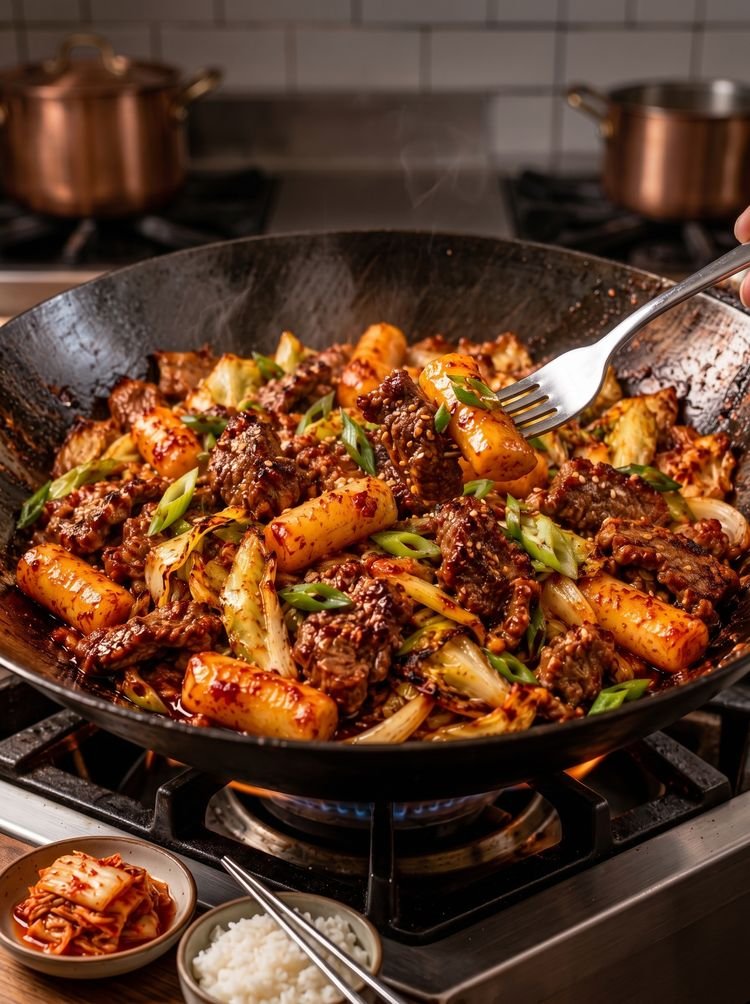
Sticky Gochujang Beef & Rice Cakes
*Estimated recipe-use costs based on retail pricing at time of creation. Prices may vary.
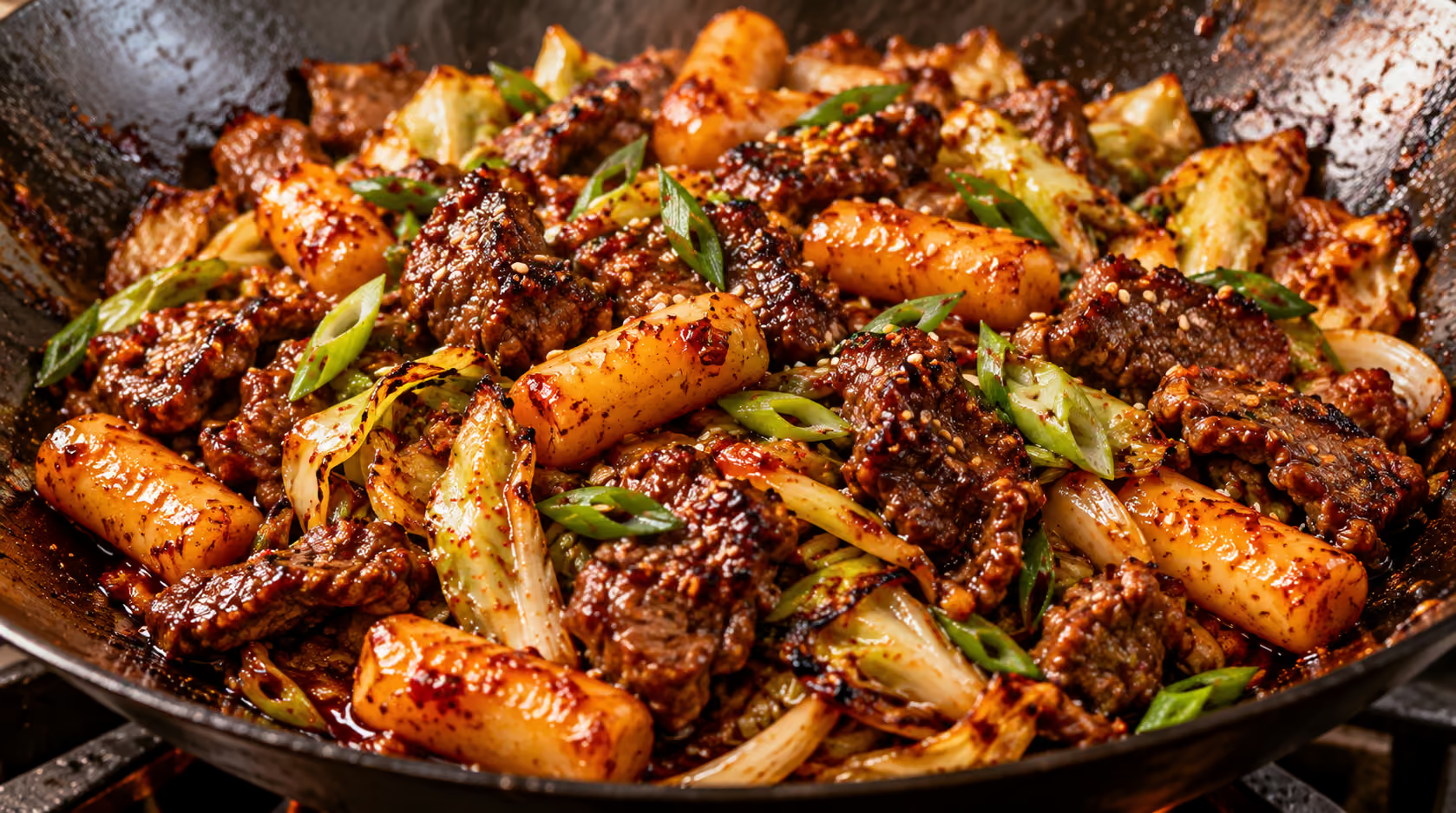
Inspired by late-night Seoul pojangmacha cart culture, this high-heat wok stir-fry pairs tender, velveted beef slices with cylindrical Korean rice cakes (tteok) for an unforgettable texture clash.
Ingredients
Amounts and prices shown for 4 servings. Tap an ingredient to check it off.
Method
Heads up: the amounts and patty count written in these steps are for the original 4 servings.
- Slice beef thinly against the grain and toss with cornstarch and soy sauce.
- Parboil the Korean rice cakes, drain thoroughly, and pat dry with paper towels.
- Whisk the gochujang, soy sauce, honey, aromatics, and chili flakes into a uniform stir-fry sauce.
- Chop the cabbage into bite-sized squares, slice the onion, and cut scallions into batons.
- 1
Toss the thinly sliced beef in a medium bowl with 1 tablespoon of soy sauce and 1 tablespoon of cornstarch until fully coated. Set aside to marinate for 10 minutes.
- 2
In a small bowl, whisk together the remaining 2 tablespoons soy sauce, gochujang, honey, mirin, 1 tablespoon toasted sesame oil, gochugaru, minced garlic, and grated ginger until smooth.
- 3
Bring a medium pot of water to a boil. Add the rice cakes and boil for 2 to 3 minutes until softened and floating. Drain well and pat thoroughly dry with a clean kitchen towel.
- 4
Heat 1 tablespoon of cooking oil in a large wok or heavy skillet over high heat until lightly smoking. Add the dried rice cakes in a single layer and sear for 2 to 3 minutes, tossing occasionally, until blistered and lightly golden on the edges. Transfer to a clean plate.
- 5
Add 1 tablespoon of cooking oil to the hot wok. Add the marinated beef in a single layer and sear undisturbed for 60 to 90 seconds to develop a deep brown crust. Flip and stir-fry for 1 more minute until just cooked through. Transfer to the plate with the rice cakes.
- 6
Add the remaining 1 tablespoon of cooking oil to the wok. Toss in the sliced onion and cabbage, stir-frying vigorously over high heat for 1 to 2 minutes until charred at the edges but still crisp.
- 7
Return the beef, blistered rice cakes, and scallions to the wok. Pour the gochujang sauce mixture around the perimeter of the hot wok. Toss continuously for 1 minute over high heat until the sauce bubbles, thickens, and lacquers every component.
- 8
Remove from the heat, drizzle with the remaining 1/2 tablespoon sesame oil, toss once more, and garnish with toasted sesame seeds before serving immediately.
Where the $19.24 goes.
Your flank steak, cylindrical Korean rice cakes and small green cabbage are 83% of the bill ($16.03 of $19.24). Everything else in the pan adds up to $3.21.
*Estimated recipe-use costs based on retail pricing at time of creation. Prices may vary.
The rice cakes are pan-blistered in screaming hot oil until crisp outside and chewy inside, while the thinly shaved beef sears in seconds to stay juicy. Everything gets enrobed in a deeply savory, sticky sauce built from fermented gochujang, toasted sesame oil, garlic, and honey, balanced by the crunch of flash-seared green cabbage and scallions. It brings all the fiery, sweet-savory street food energy of Korean night markets directly to an everyday home kitchen with quick, dynamic wok technique.
Culinary Logic
Velveting the beef slices with a pinch of cornstarch and soy sauce creates a protective starch barrier that locks in moisture during intense wok searing, preventing lean cuts from turning tough. Pre-boiling the dense tteokbokki rice cakes gelatinizes their core starches, so when they hit the roaring-hot, lightly oiled wok, their exterior rapidly crisps and blisters without absorbing excess oil. Introducing the high-sugar gochujang and honey sauce at the final stage allows the residual sugars to caramelize against the smoking carbon steel surface without scorching, creating a lacquer-like glaze that clings tightly to both the chewy rice cakes and seared beef ribbons.