More than
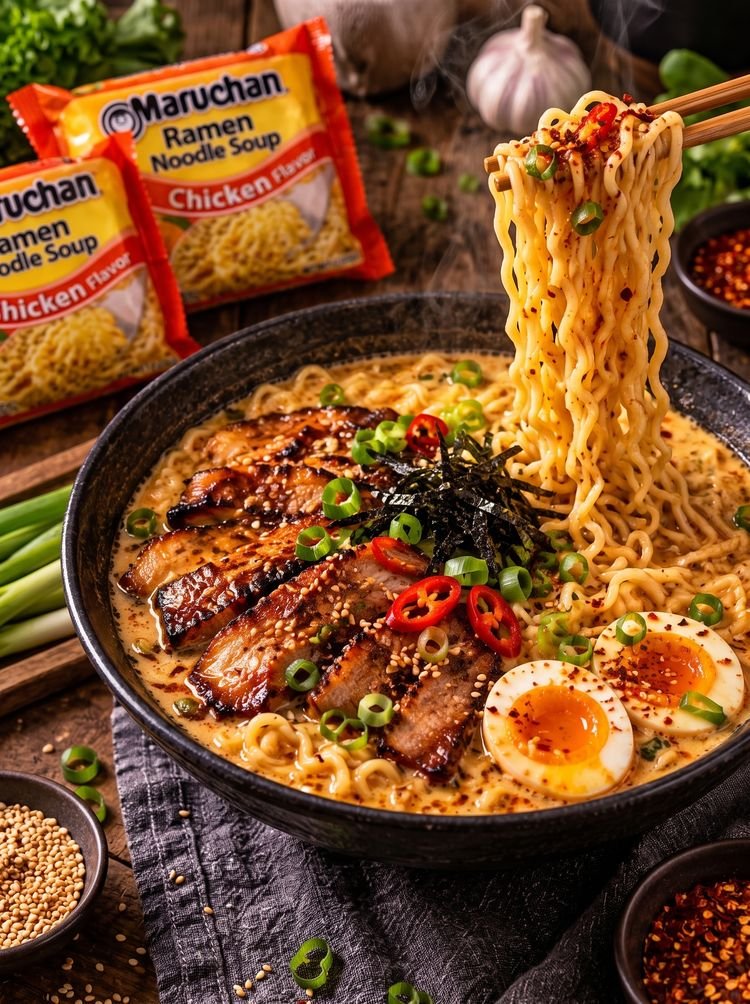
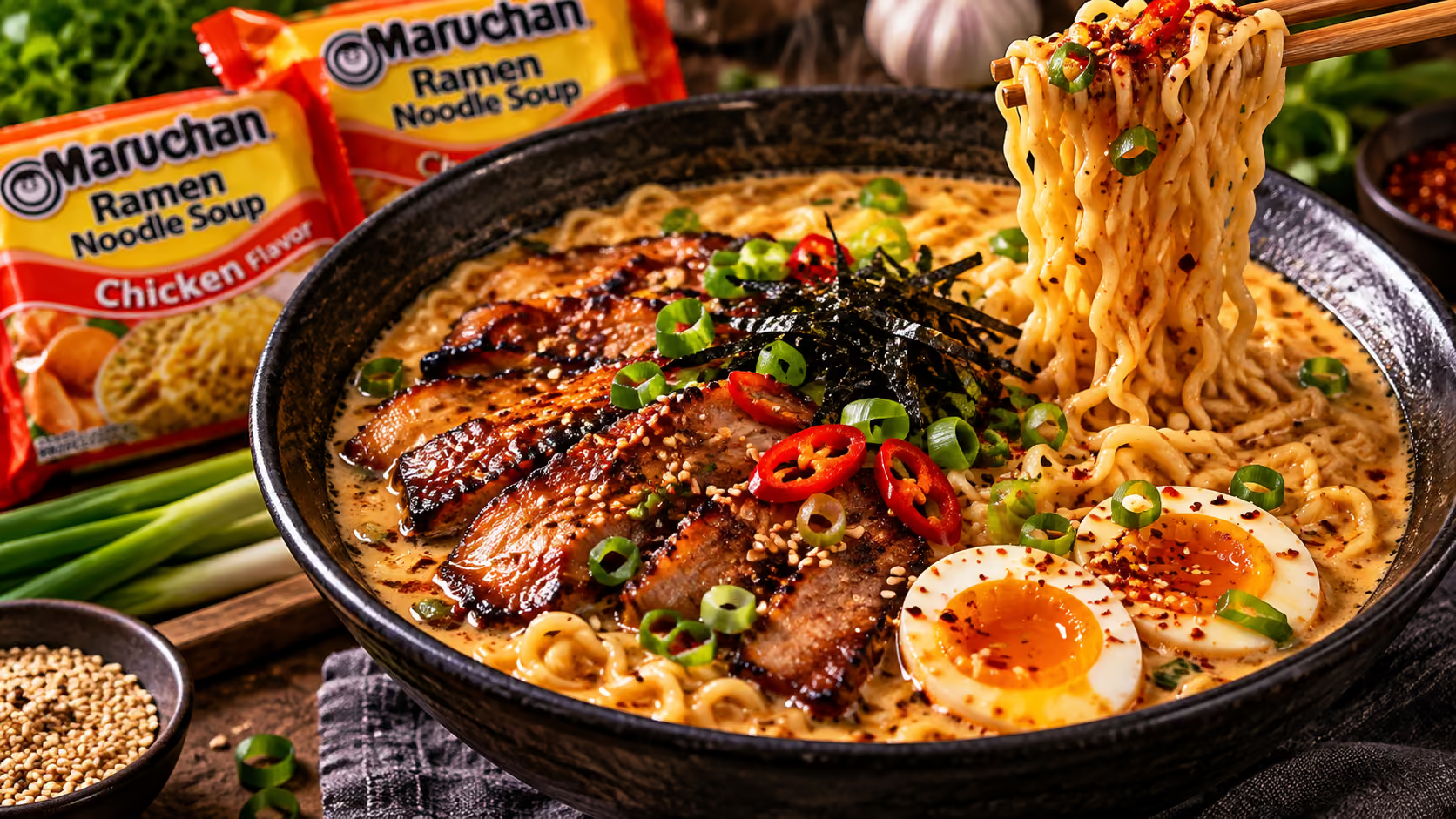
Creamy Gochujang Pork Ramen
*Estimated recipe-use costs based on retail pricing at time of creation. Prices may vary.
This dish proves that deep, craveable ramen culture doesn't require a forty-eight-hour bone simmer to deliver soul-warming decadence on a weeknight.
Ingredients
Amounts and prices shown for 4 servings. Tap an ingredient to check it off.
Method
Heads up: the amounts and patty count written in these steps are for the original 4 servings.
- Freeze the pork shoulder for 25 to 30 minutes before slicing across the grain to achieve razor-thin ribbons.
- Prepare an ice bath in a medium bowl with equal parts cold water and ice cubes for shocking the soft-boiled eggs.
- Mince garlic, grate ginger, and measure gochujang, soy sauce, and mirin into small prep ramekins.
- Slice scallions and Fresno chili thinly; have sesame seeds ready for final assembly.
- 1
Bring 4 inches of water to a rolling boil in a heavy Dutch oven or large soup pot. Gently lower in the cold eggs with a slotted spoon and boil uncovered for exactly 6 minutes and 30 seconds. Transfer immediately to an ice water bath to halt cooking, peel once cooled, slice in half lengthwise, and set aside.
- 2
Pour out the boiling water, wipe the pot thoroughly dry with paper towels, and set it over medium-high heat. Add 1 tablespoon of toasted sesame oil.
- 3
Add the thinly sliced pork shoulder in a single, uncrowded layer (working in two batches if necessary). Sear without stirring for 2 to 3 minutes until deeply browned and caramelized on the edges, then flip and cook for 1 minute more until just cooked through. Transfer browned pork to a plate and keep warm.
- 4
Reduce the heat under the pot to medium. Add the remaining 1 tablespoon of sesame oil along with the minced garlic, grated ginger, and gochujang. Stir constantly for 60 to 90 seconds until the chili paste darkens slightly and turns deeply fragrant.
- 5
Pour in the chicken broth, soy sauce, and mirin, scraping up any caramelized browned bits stuck to the bottom of the pot. Bring to a brisk simmer for 3 minutes.
- 6
Whisk in the heavy cream until the broth turns an opaque, silky pale-apricot color and returns to a gentle simmer. Do not boil vigorously.
- 7
Drop the four blocks of instant ramen noodles directly into the simmering broth. Cook for 2 to 3 minutes, using tongs to gently pull apart and swirl the noodles until tender with a slight chew.
- 8
Turn off the heat. Use tongs to divide the springy noodles into four deep bowls, then ladle the hot, creamy broth over each portion.
- 9
Top each bowl with the reserved seared pork slices arranged across the surface, two soft-boiled egg halves, sliced scallions, red chili rings, and a sprinkle of toasted sesame seeds before serving immediately.
Where the $14.18 goes.
Your boneless pork shoulder, low-sodium chicken broth and instant ramen noodle blocks are 71% of the bill ($10.05 of $14.18). Everything else in the pan adds up to $4.13.
*Estimated recipe-use costs based on retail pricing at time of creation. Prices may vary.
We bridge traditional Japanese ramen architecture with a Korean pantry punch by emulsifying rich chicken stock, gochujang, and heavy cream directly in one pot. Inexpensive pork shoulder is sliced razor-thin across the grain and seared at blistering heat so the edges crisp while the interior stays tender and succulent. When paired with springy, wavy instant ramen noodles, jammy soft-boiled eggs, and crisp scallions, the contrast between the unctuous, milky-spiced broth and the savory charred pork turns an ultra-accessible grocery haul into a stunning, restaurant-tier centerpiece.
Culinary Logic
Thinly slicing pork shoulder across the muscle fibers tenderizes an otherwise tough cut instantly, allowing high-heat searing to render intramuscular fat and produce intense Maillard browning in minutes. Blooming minced garlic, ginger, and fermented gochujang in that rendered pork fat dissolves fat-soluble flavor compounds and tames raw chili astringency into rounded umami. Whisking heavy cream into seasoned stock creates an instant paitan-style emulsification, mimicking the mouth-coating gelatin of traditional long-simmered tonkotsu broth. Finally, cooking the noodles directly in the seasoned liquid releases a touch of surface starch that binds the broth, ensuring every bite clings tightly to the wavy noodles without thinning out.